.png)

What a Last Mile Delivery Service Should Do
A late final delivery can undo the work of an entire supply chain. Stock may have left the warehouse on time, a site may be ready for materials, or a customer may be waiting for a promised item, but the job is not complete until it reaches the right person in the right condition. A dependable last mile delivery service is what turns that final handover into a positive result rather than a costly problem.
For businesses across Bradford, Leeds, Sheffield, Greater Manchester and the wider UK, last mile delivery is often where customer expectations are highest. It needs practical planning, responsive drivers and clear communication - especially when time, access or handling requirements change at short notice.
What a last mile delivery service needs to do
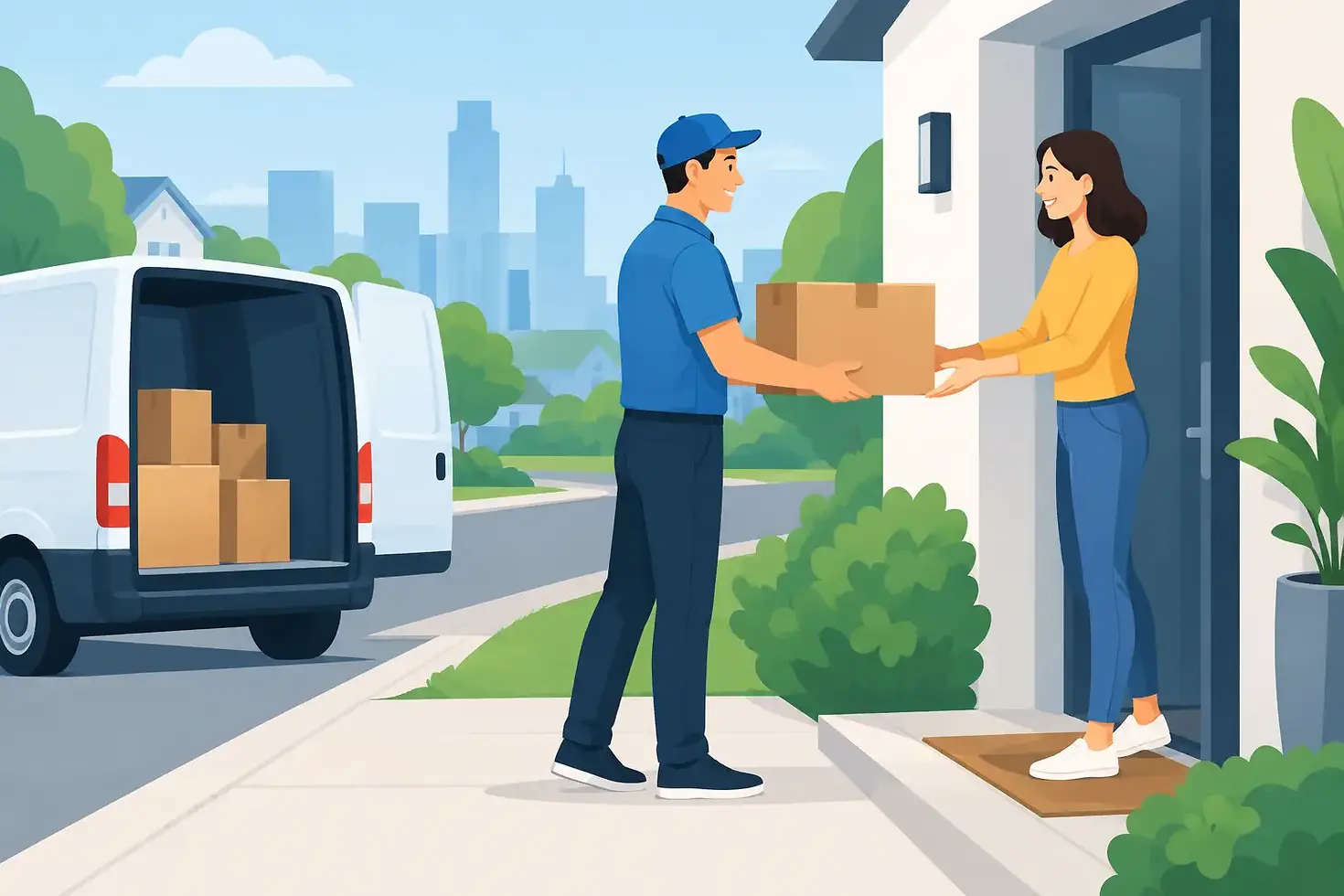
Last mile delivery covers the final journey from a depot, store, distribution point or local hub to the end customer. That could mean delivering medical supplies to a clinic, retail stock to a branch, equipment to a construction site, furniture to a home or event materials to a venue.
The distance may be short, but the work is rarely simple. Drivers may need to work around timed booking slots, city-centre restrictions, busy loading bays, site safety rules and customers who cannot wait all day. A delivery partner must be able to manage the practical detail, not simply collect a parcel and hope for the best.
A good service provides the right vehicle, a trained driver and a delivery plan suited to the consignment. It also keeps the sender informed when a job is collected, when it is out for delivery and when it has been completed. Proof of delivery matters because it gives operations teams a clear record and helps resolve questions quickly.
Speed is valuable, but it should not come at the cost of care. Fragile, high-value, bulky and time-sensitive goods all need appropriate handling. The best approach depends on what is being delivered and where it is going.
The final mile affects more than delivery costs
For retailers, a missed delivery can mean a refund, a complaint and a customer who does not return. For a construction business, delayed materials can leave a team waiting on site. For medical and manufacturing operations, an urgent part or essential item arriving late can interrupt work that was carefully scheduled.
That is why the lowest quote is not always the lowest overall cost. A service that appears cheap but lacks communication, suitable vehicles or reliable capacity can create avoidable admin, downtime and reputational damage.
The final mile also shapes how customers view your business. They do not see warehouse processes or transport planning. They see the driver who arrives at their door, the condition of the goods and whether the agreed time was met. Your delivery provider is representing your operation at that point, so professionalism matters.
Match the service to the job
There is no single delivery model that works for every consignment. Urgent jobs, planned distribution routes and large-item deliveries need different levels of planning and support.
Same-day delivery for urgent requirements
Same-day delivery is appropriate when an item needs to move without waiting for the next scheduled run. This could include replacement machinery parts, documents, medical supplies, retail stock or an item needed to keep a project moving.
A dedicated vehicle can be the right choice when timing is critical or the consignment requires direct handling. The goods are collected and delivered specifically for your job, reducing unnecessary stops and giving you greater control over the timeline. It may cost more than a shared network service, but it can prevent far greater losses when a delay would stop work or disappoint an important customer.
Scheduled delivery for regular operations
Businesses with predictable delivery requirements often benefit from scheduled transport. This may involve daily collections, weekly stock movements, planned branch replenishment or recurring deliveries to customers and sites.
Scheduled work gives your team consistency and allows routes to be organised around delivery windows, vehicle access and expected volumes. It is particularly useful for businesses that need transport capacity without the fixed cost and management burden of running their own fleet.
Multi-drop distribution for wider coverage
Multi-drop delivery is designed for consignments travelling to several locations on the same route. Retailers supplying stores, manufacturers delivering components and event teams distributing materials can all benefit from a properly planned multi-drop schedule.
The key is route planning that balances efficiency with realistic delivery commitments. Packing order, delivery windows, driver hours and access restrictions all affect whether a route runs smoothly. A provider should plan the work around the actual requirements rather than promising an unrealistic timetable.
Furniture and large-item delivery
Furniture, appliances, fixtures and other bulky items need more than standard parcel handling. Customers expect careful loading, secure transport and a professional arrival at the property or business premises.
Before booking, confirm the item dimensions, collection and delivery access, floor level, parking arrangements and whether assistance is required at either end. A van that is suitable for the item and a driver who understands safe handling reduce the risk of damage, delays and awkward surprises on delivery day.
Questions to ask before booking
The right provider should make booking straightforward, but a clear brief helps protect your deadline. Start with collection and delivery postcodes, the date, the required arrival time and accurate item details. Include weight, dimensions, quantity and any handling instructions.
It is also worth confirming whether the delivery is to a business, private address, construction site, hospital, event venue or restricted location. A site may require a named contact, safety equipment, a booking reference or delivery at a specific gate. A city-centre location may have limited loading access. These details should be planned before the vehicle is dispatched.
Ask how the service handles updates and proof of delivery. For an operations manager, a simple confirmation can save time chasing drivers and calling customers. For high-value or sensitive goods, clear handover records provide additional reassurance.
Finally, be open about urgency. If the delivery must arrive by a fixed time, say so from the outset. A realistic plan is more useful than a vague promise. Where a deadline cannot be guaranteed because of distance, traffic, access restrictions or late booking, a professional logistics provider should explain the options clearly.
Build flexibility into your delivery plan
Demand does not always follow a neat schedule. A supplier may let you down, a customer may bring a deadline forward or a site may need an additional delivery with little notice. Businesses that rely entirely on fixed internal transport can struggle when these exceptions occur.
Using an external delivery partner gives you additional capacity when it is needed. You can book urgent work, arrange a dedicated van for a sensitive consignment or add distribution support during busy trading periods without committing to permanent vehicles and drivers.
That flexibility works best when the provider understands your operation. Regular customers should not need to explain the same collection procedures, delivery standards and product requirements every time they book. Over time, an experienced transport partner can help make repeat work faster to arrange and easier to manage.
AIG B2B Logistics supports both one-off jobs and ongoing delivery requirements, providing practical coverage for local, regional and nationwide transport. Whether the requirement is an urgent same-day collection, a planned multi-drop route or careful delivery of large items, the focus should remain the same: clear communication, dependable timing and goods handled with care.
When a local response makes the difference
Nationwide coverage is useful, but local knowledge has real value in the final mile. Drivers familiar with West Yorkshire, Leeds, Bradford, Sheffield and Greater Manchester are better placed to understand common traffic pressure points, industrial estates, town-centre access and local delivery patterns.
That does not remove the need for proper planning. Traffic, weather and customer availability can still affect any route. It does mean your delivery team can respond with practical judgement when conditions change, rather than treating every job as a generic postcode on a screen.
For household customers, the same principle applies. A home move or furniture delivery can become stressful if collection times are uncertain or access has not been considered. Confirming the details early, choosing an appropriate vehicle and dealing with a responsive team makes the day far more manageable.
Make the last handover count
A last mile delivery service should give your business more control, not more chasing. It should be easy to book, clear on pricing, realistic about timing and ready to adapt when the job demands it. Most importantly, it should protect the standard of service you have promised your own customers.
If you have goods that need moving today, planned deliveries to organise or a regular distribution requirement to discuss, prepare the key job details and request a clear quote. The right delivery plan starts with a straightforward conversation and ends with your goods safely where they need to be.


Comments